
SUMMARY
Security in Historical Perspective: From Rise to Containment
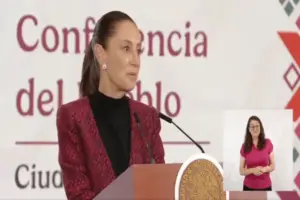
President Claudia Sheinbaum presented a structural analysis of violence. Under Felipe Calderón, homicides rose by 148%, reflecting a confrontational strategy that escalated the conflict with organized crime; under Peña Nieto, the increase continued at 42%, maintaining an upward trend.
With the arrival of President López Obrador, the curve was reversed for the first time with a 9% reduction, and under the current administration, this trend is consolidating with a preliminary decrease of 45% in intentional homicides projected for 2026.
New Security Model: Professionalization with a Humanistic Approach
The Leadership Command School was launched at the National Public Security Academy. It is a project that seeks to fundamentally transform the training of those responsible for maintaining public security. A comprehensive model is being promoted that coordinates the National Guard, the Ministry of Security and Citizen Protection (SSPC), the Ministry of Defense, the Navy, the National Intelligence Center (CNI), and the public prosecutor’s offices, ensuring effective coordination. Training will be based on upholding the principles of honesty, professionalism, humanism, and respect for human rights.
Public finances and redistribution: growth with social justice
Federal revenue grew from 4 trillion pesos (US$230 billion) in 2019 to 6 trillion pesos (US$350 billion) in 2025, without raising taxes or increasing the country’s debt, and 1 trillion pesos (US$57.87 billion) is allocated directly to the people through social programs.
This model is based on improved tax collection, combating tax evasion, and ending fiscal privileges. It is underpinned by three key actions to reduce inequality: raising the minimum wage, implementing wellbeing programs, and refusing tax amnesties, ensuring that wealth is distributed, the domestic market is strengthened, and historical gaps and deficiencies are closed.
Mexico–United States Relations: Productive Integration and Sovereignty
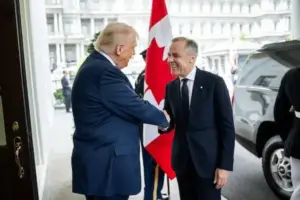
The President agreed with Donald Trump to strengthen bilateral trade by replacing imports with regional production, thus consolidating Mexico as a key player in North America. The country remains the leading exporter to the U.S. and its largest buyer, in a relationship that drives growth, productive nearshoring, and employment.
Mexico in the World: An Export Powerhouse
Mexico ranked among the world’s top 10 exporters in 2025, reflecting a strengthened productive sector and its strategic role in global trade, driven by economic stability, the domestic market, and the use of nearshoring.
Defending Mexicans in the United States
Following the death of a Mexican national in ICE custody, the President ordered daily consular visits to detention centers, sent a diplomatic note to Washington, and announced actions before the Inter-American Commission on Human Rights (IACHR) and UN agencies. The goal is to guarantee rights and strengthen the protection of Mexicans abroad.